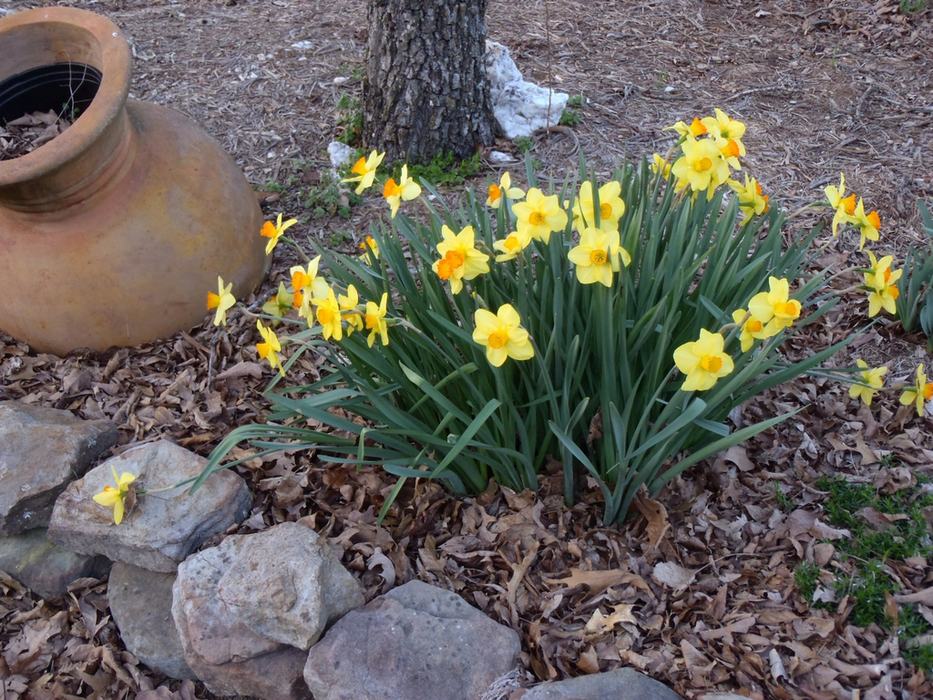
Many of us incorporate spring-flowering bulbs into our landscapes to enjoy seeing the first colors of spring. However, the time you plant these bulbs - late fall - is not a time of year you would typically be thinking about spring color.
Spring-flowering bulbs are planted in November, typically when the soil temperature has dropped below 60°F. Examples include daffodils, tulips, crocus, and hyacinths, just to name a few. A bulb is like a pre-packaged plant because it stores all the food and energy the plant needs to successfully grow. The reason that spring-flowering bulbs are planted in November is that most need a 12- to 16-week chilling period to produce flowers. Planting in November allows the bulbs to meet this necessary chilling requirement. When bulbs do not receive a long enough chilling period, they usually have shorter stems and bloom close to the ground.
When purchasing bulbs choose ones without mold, bruising, or soft spots. If you buy bulbs in September or October, they should be stored in a cool area until planting time. The planting depth and spacing of bulbs depend on the bulb’s size. Plant bulbs three to four times as deep (measured from the bulb’s base) as the width of the bulb. For spacing, plant large bulbs 3 to 6 inches apart and small bulbs 1 to 2 inches apart.
Fertilizing bulbs will not help with this season’s performance, since the bulb already has food stored. However, fertilizer will help for the future seasons. There are two options for fertilizing bulbs. One option is to include a slow-release fertilizer in the soil as you are planting the bulbs. The second option is to apply a soluble, quick-release fertilizer at the time of planting and again when shoots start emerging. A 10-10-10 fertilizer is recommended for either option. Along with applying a complete fertilizer, incorporating some additional phosphorus at the time of planting can encourage root growth. Bone meal or superphosphate are often used as types of phosphorus. However, it is important to get a soil test of the planting area to determine if there is already enough phosphorus in the soil, which could save you time and money.
A question often asked with spring-flowering bulbs deals with tulips. People often plant tulips, enjoy them for one season, but are then disappointed when they don’t return the following year. In areas like Eastern North Carolina, tulips are often treated as annual flowers in that they must be replanted every year. Our climate and soil temperature tend to stay too warm for tulips to successfully come back year after year.
As we get into the fall season, take time to purchase some spring-flowering bulbs to plant this November. When late winter arrives and you are anxiously awaiting spring weather, you will be glad that you planted those bulbs and added color in the landscape to welcome in spring!
Jessica Strickland is an Agriculture Extension Agent, specializing in horticulture for North Carolina Cooperative Extension in Wayne County.
Learn More!