Basic Holiday Food Safety

— Written By
en Español / em Português
Español

El inglés es el idioma de control de esta página. En la medida en que haya algún conflicto entre la traducción al inglés y la traducción, el inglés prevalece.

Al hacer clic en el enlace de traducción se activa un servicio de traducción gratuito para convertir la página al español. Al igual que con cualquier traducción por Internet, la conversión no es sensible al contexto y puede que no traduzca el texto en su significado original. NC State Extension no garantiza la exactitud del texto traducido. Por favor, tenga en cuenta que algunas aplicaciones y/o servicios pueden no funcionar como se espera cuando se traducen.


Português

Inglês é o idioma de controle desta página. Na medida que haja algum conflito entre o texto original em Inglês e a tradução, o Inglês prevalece.

Ao clicar no link de tradução, um serviço gratuito de tradução será ativado para converter a página para o Português. Como em qualquer tradução pela internet, a conversão não é sensivel ao contexto e pode não ocorrer a tradução para o significado orginal. O serviço de Extensão da Carolina do Norte (NC State Extension) não garante a exatidão do texto traduzido. Por favor, observe que algumas funções ou serviços podem não funcionar como esperado após a tradução.


English

English is the controlling language of this page. To the extent there is any conflict between the English text and the translation, English controls.

Clicking on the translation link activates a free translation service to convert the page to Spanish. As with any Internet translation, the conversion is not context-sensitive and may not translate the text to its original meaning. NC State Extension does not guarantee the accuracy of the translated text. Please note that some applications and/or services may not function as expected when translated.

Collapse ▲

Basic Holiday Food SafetyTips for Holiday Food Safety

Ensure a safe and healthy holiday season by reviewing key food safety practices. This resource highlights proper preparation, cooking, and storage techniques to help reduce the risk of foodborne illness. Taking a few simple precautions can make a meaningful difference in keeping your family and guests safe during holiday gatherings.


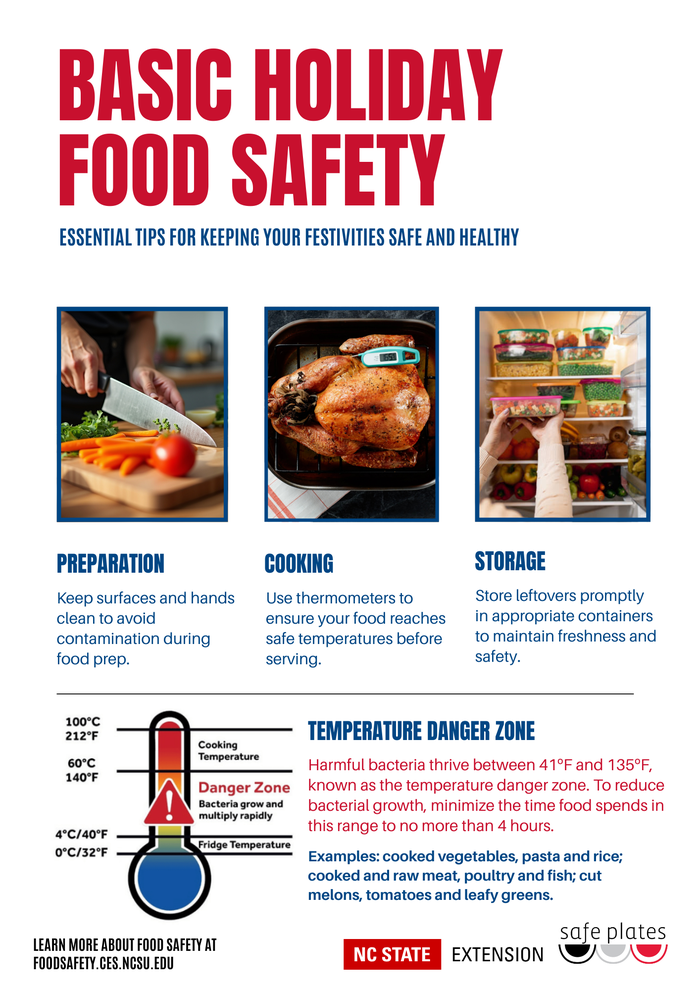
Basic Holiday Food Safety

Essential tips for keeping your festivities safe and healthy

Preparation

Keep surfaces and hands clean to avoid contamination during food prep.

Cooking

Use thermometers to ensure your food reaches safe temperatures before serving.

Storage

Store leftovers promptly in appropriate containers to maintain freshness and safety.

Temperature Danger Zone

Harmful bacteria thrive between 41°F and 135°F, known as the temperature danger zone. To reduce bacterial growth, minimize the time food spends in this range to no more than 4 hours.

Examples: cooked vegetables, pasta and rice; cooked and raw meat, poultry and fish; cut melons, tomatoes and leafy greens.

Learn more about food safety at foodsafety.ces.ncsu.edu

Basic Holiday Food Safety

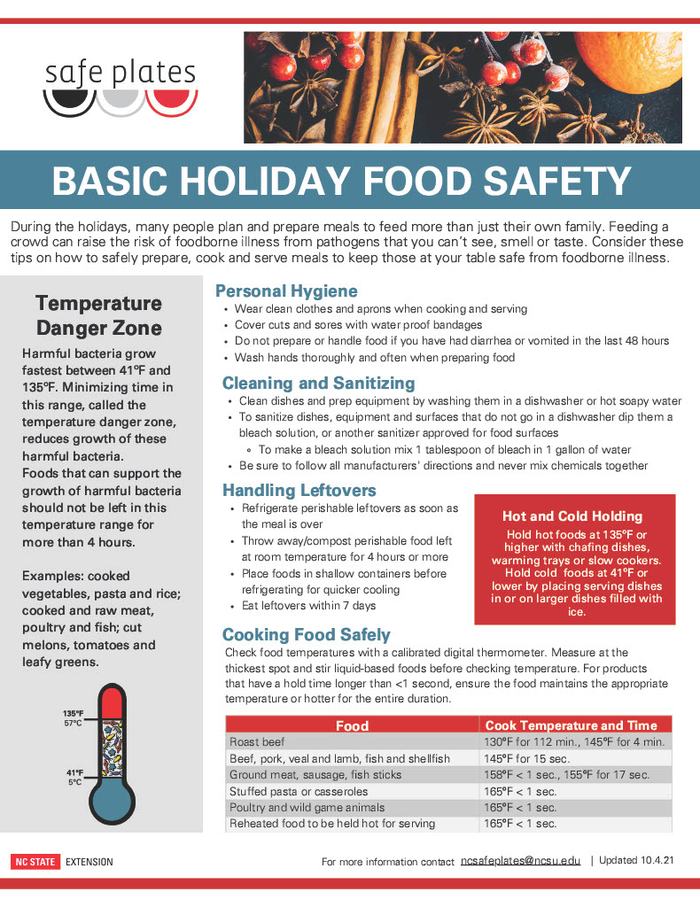
During the holidays, many people plan and prepare meals to feed more than just their own family. Feeding a crowd can raise the risk of foodborne illness from pathogens that you can’t see, smell or taste. Consider these tips on how to safely prepare, cook and serve meals to keep those at your table safe from foodborne illness.

Temperature Danger Zone

Harmful bacteria grow fastest between 41°F and 135°F. Minimizing time in this range, called the temperature danger zone, reduces growth of these harmful bacteria.

Foods that can support the growth of harmful bacteria should not be left in this temperature range for more than 4 hours.

Examples: cooked vegetables, pasta and rice; cooked and raw meat, poultry and fish; cut melons, tomatoes and leafy greens.

Personal Hygiene

  • Wear clean clothes and aprons when cooking and serving
  • Cover cuts and sores with waterproof bandages
  • Do not prepare or handle food if you have had diarrhea or vomited in the last 48 hours
  • Wash hands thoroughly and often when preparing food

Cleaning and Sanitizing

  • Clean dishes and prep equipment by washing them in a dishwasher or hot soapy water
  • To sanitize dishes, equipment and surfaces that do not go in a dishwasher, dip them in a bleach solution or use another sanitizer approved for food surfaces
  • To make a bleach solution, mix 1 tablespoon of bleach in 1 gallon of water
  • Be sure to follow all manufacturers’ directions and never mix chemicals together

Handling Leftovers

  • Refrigerate perishable leftovers as soon as the meal is over
  • Throw away/compost perishable food left at room temperature for 4 hours or more
  • Place foods in shallow containers before refrigerating for quicker cooling
  • Eat leftovers within 7 days

Cooking Food Safely

Check food temperatures with a calibrated digital thermometer. Measure at the thickest spot and stir liquid-based foods before checking temperature. For products that have a hold time longer than <1 second, ensure the food maintains the appropriate temperature or hotter for the entire duration.

Food Cook Temperature and Time
Roast beef 130°F for 112 min, 145°F for 4 min
Beef, pork, veal and lamb, fish and shellfish 145°F for 15 sec
Ground meat, sausage, fish sticks 155°F x 1 sec, 155°F for 17 sec
Stuffed pasta or casseroles 165°F
Poultry and wild game animals 165°F x 1 sec
Reheated food to be held hot for serving 165°F x 1 sec

Hot and Cold Holding

  • Hold hot foods at 135°F or higher with chafing dishes, warming trays or slow cookers.
  • Hold cold foods at 41°F or lower by placing serving dishes in or on larger dishes filled with ice.

For more information contact: ncsafeplates@ncsu.edu

Written By

Hannah Williams, N.C. Cooperative ExtensionHannah WilliamsCounty Extension Support Specialist, Social Media Call Hannah Email Hannah N.C. Cooperative Extension, Wayne County Center
Updated on Dec 9, 2025
Was the information on this page helpful? Yes check No close
Scannable QR Code to Access Electronic Version