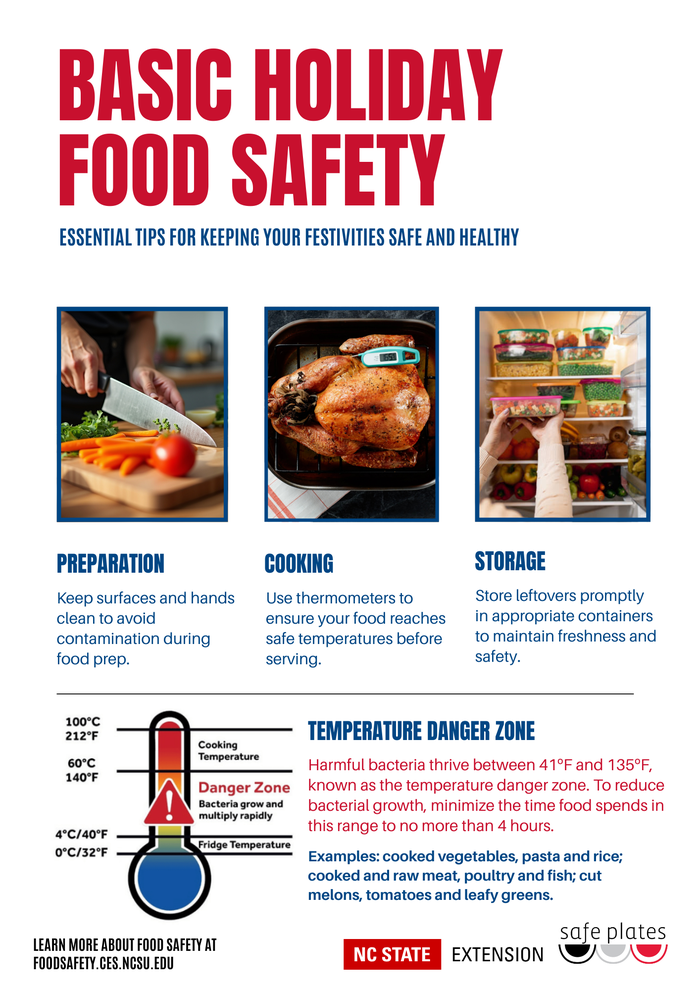
Ensure a safe and healthy holiday season by reviewing key food safety practices. This resource highlights proper preparation, cooking, and storage techniques to help reduce the risk of foodborne illness. Taking a few simple precautions can make a meaningful difference in keeping your family and guests safe during holiday gatherings.
Basic Holiday Food Safety
Essential tips for keeping your festivities safe and healthy
Preparation
Keep surfaces and hands clean to avoid contamination during food prep.Cooking
Use thermometers to ensure your food reaches safe temperatures before serving.Storage
Store leftovers promptly in appropriate containers to maintain freshness and safety.Temperature Danger Zone
Harmful bacteria thrive between 41°F and 135°F, known as the temperature danger zone. To reduce bacterial growth, minimize the time food spends in this range to no more than 4 hours.Examples: cooked vegetables, pasta and rice; cooked and raw meat, poultry and fish; cut melons, tomatoes and leafy greens.
Learn more about food safety at foodsafety.ces.ncsu.eduBasic Holiday Food Safety
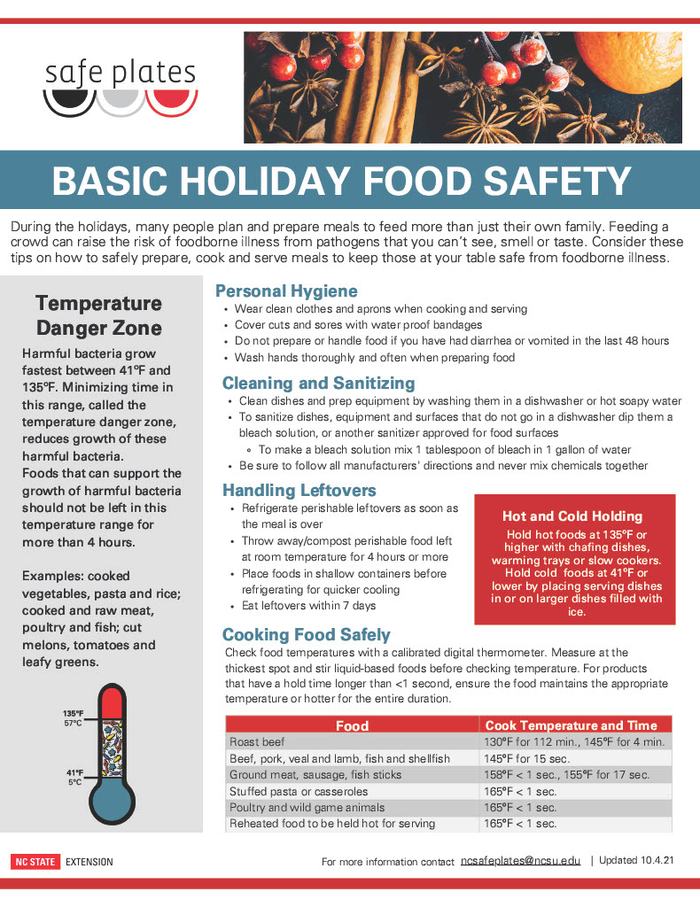
During the holidays, many people plan and prepare meals to feed more than just their own family. Feeding a crowd can raise the risk of foodborne illness from pathogens that you can’t see, smell or taste. Consider these tips on how to safely prepare, cook and serve meals to keep those at your table safe from foodborne illness.Temperature Danger Zone
Harmful bacteria grow fastest between 41°F and 135°F. Minimizing time in this range, called the temperature danger zone, reduces growth of these harmful bacteria.Foods that can support the growth of harmful bacteria should not be left in this temperature range for more than 4 hours.
Examples: cooked vegetables, pasta and rice; cooked and raw meat, poultry and fish; cut melons, tomatoes and leafy greens.Personal Hygiene
- Wear clean clothes and aprons when cooking and serving
- Cover cuts and sores with waterproof bandages
- Do not prepare or handle food if you have had diarrhea or vomited in the last 48 hours
- Wash hands thoroughly and often when preparing food
Cleaning and Sanitizing
- Clean dishes and prep equipment by washing them in a dishwasher or hot soapy water
- To sanitize dishes, equipment and surfaces that do not go in a dishwasher, dip them in a bleach solution or use another sanitizer approved for food surfaces
- To make a bleach solution, mix 1 tablespoon of bleach in 1 gallon of water
- Be sure to follow all manufacturers’ directions and never mix chemicals together
Handling Leftovers
- Refrigerate perishable leftovers as soon as the meal is over
- Throw away/compost perishable food left at room temperature for 4 hours or more
- Place foods in shallow containers before refrigerating for quicker cooling
- Eat leftovers within 7 days