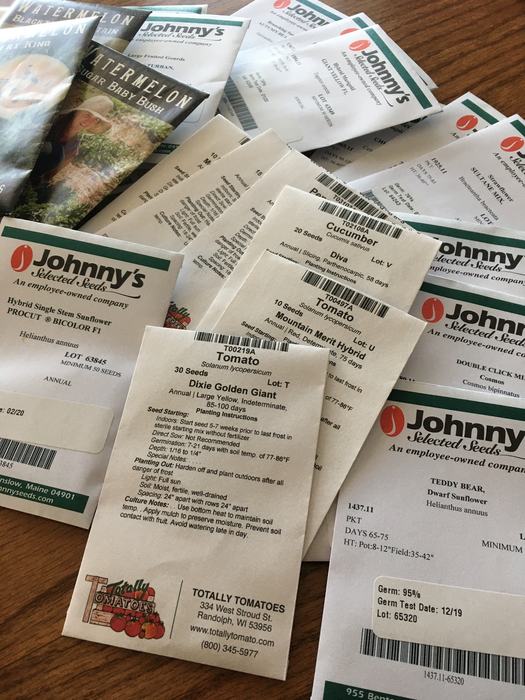
During the winter season, gardeners are usually longing for more daylight and warmer temperatures so we can enjoy time in our gardens and landscapes. Winter, however, can be the time when garden enthusiasts can spend hours looking through seed catalogs, dreaming, and planning for their upcoming spring gardens. Eventually gardeners decided what new vegetable or flower cultivars to order along with ordering their long time favorites.
Now is a good time to start ordering seed catalogs. This way you can enjoy flipping through seed catalogs, admiring all the new flowers and vegetables available during the winter month. If you have access to the internet, it is very easy to do a search for seed catalogs. Many vegetable and flower seed catalogs can be found on the internet where many of the websites have a place you can request a free catalog simply by submitting your name and mailing address.
Although most seed companies will have sufficient quantities of seed to fill orders it is still a good idea to get your orders in early so you get the seeds you want. Some companies offer "early bird specials or discounts" to entice gardeners to fill their order early and not wait until the last minute. Another advantage to ordering seeds early is to allow time for gardeners who like to get a head start growing their plants early in the house or a greenhouse instead of waiting to sow seeds directly outside later in the spring.
When deciding what seeds you are going to order it is a good idea to ask yourself a few questions about the plants you are getting ready to order to avoid purchases not needed or ones that will not be successful. Although this sounds simple, the first question to ask yourself is what exactly is the plant you are thinking about buying. There are times when a plant may have a catchy name or descriptions that make them sound outstanding or be a "must-have". This may lead to a situation of not getting the plant you thought you ordered. Common names can vary, but look for a Latin or scientific name, or look as to what type of plant it actually is.